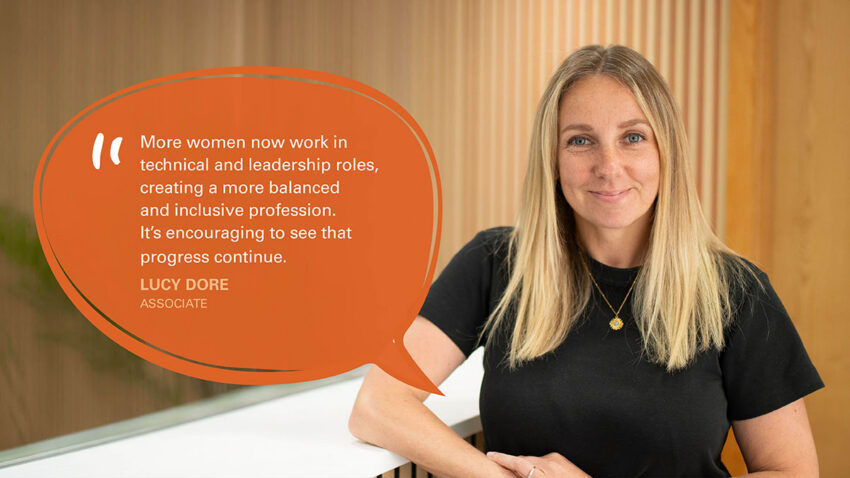


Thrive Segments: Lucy Dore Celebrates 25 Years!
For 25 years, our Associate Lucy Dore has been a valued part of Thrive Architects, contributing to the practice’s growth, success and culture along the way. To mark this incredible milestone, we caught up with Lucy to reflect on her journey within Thrive’s Architectural Technical Services.
What first attracted you to architecture, and how did you end up joining the practice as a trainee?
Architecture wasn’t the career I originally planned to pursue. Growing up, I wanted to work as cabin crew because I loved the idea of travelling but after finishing my A Levels at 17, I applied for a trainee technician role at Oldfield King, now Thrive Architects. I originally expected to stay for just a year. However, I quickly discovered how much I enjoyed the work and the variety of opportunities available. I gained experience in urban design, planning and technical design, but technical work appealed to me most. The practice supported me while I studied for my HNC and gained practical experience. Twenty-five years later, I’m still here!
Looking back, what is the biggest lesson you’ve learned over the last 25 years?
One lesson has stayed with me throughout my career is you get out what you put in. When I joined Thrive, I knew very little about housing design, construction or AutoCAD. I started with a blank slate. At the time, there were no online tutorials or instant answers. I learned by asking questions, gaining experience and listening to colleagues. The architecture industry changes constantly with new regulations, technologies and ways of working emerging every year. As I’ve progressed to Associate level, my learning has expanded beyond technical delivery, I now spend more time understanding the wider business and helping it grow.
What has kept you motivated to stay with the same practice for 25 years?
Living five minutes from the office certainly helps, but that’s not the reason I’ve stayed. I feel a strong sense of loyalty to Thrive because the business invested in me from the beginning. From understanding Building Regulations to delivering residential developments, every stage of my career has brought new opportunities to learn and grow. The culture also plays a huge part. People work collaboratively, share knowledge and support one another regardless of job title. Whether we’re working on projects or enjoying one of our famous cheese and meat lunches, there’s a genuine sense of teamwork.
What technological advances have had the biggest impact on your work?
Without question, the internet has had the biggest impact. When I started as a trainee, one of my daily jobs was checking emails on the only computer connected to the internet. We posted drawings to clients and consultants and hoped they arrived safely. If a deadline was tight, I would drive to a courier depot and send them directly. Looking back, it’s hard to believe how much things have changed. Today, digital communication, online resources and emerging AI tools help us work far more efficiently. We still value face-to-face meetings, but virtual meetings save significant travel time and help us support clients across the country. These advances have made our architectural technical services faster, more efficient and more collaborative than ever before.
What challenges have shaped you the most professionally?
Starting out in a male-dominated industry wasn’t always easy. As a trainee technician, I often found myself as the only woman in the room during meetings and site visits. Many of the people I met had decades more experience than me. At times, I felt out of my comfort zone. However, every challenge helped me grow and today, I no longer think twice about being in those situations. It’s also been encouraging to see how the industry has evolved.
The wide variety of projects I’ve worked on has also shaped my career. Each project requires problem-solving, collaboration and technical expertise. From small, thatched developments through to large steel-framed apartment schemes, each project has added to my experience and given me a strong catalogue of knowledge to draw upon.
What goals do you still hope to achieve?
While reaching 25 years is a significant milestone, I still feel there’s plenty more to learn. I’m particularly excited to explore how AI can support the processes we have at Thrive, helping us deliver architectural technical services more efficiently and effectively. As an Associate, I also want to continue developing my understanding of the business, contributing not only to project delivery and technical excellence but also to the future growth and direction of the practice.
Related Posts

